GERIATRICS TRAINING IN THE PIEDMONT REGION: PERSPECTIVES ON LONGEVITY AND INNOVATION IN ELDERLY CARE IN ASTI
Keywords:
geriatrics, functional longevity, territorial care, health innovation, dementias, palliative care, clinical communicationAbstract
Population ageing requires health systems to strengthen competencies and networks capable of sustaining not only survival, but also the functional capacity, autonomy, and dignity of older adults. The World Health Organization (WHO) defines “healthy ageing” as the process of developing and maintaining functional ability that enables well-being in older age, resulting from the interaction between intrinsic capacity (physical and mental), the environment, and their interactions. Within this framework, innovation in geriatrics involves not only technologies but, above all, organizational models and integrated clinical practices, with an emphasis on prevention, continuity, and coordination of care.
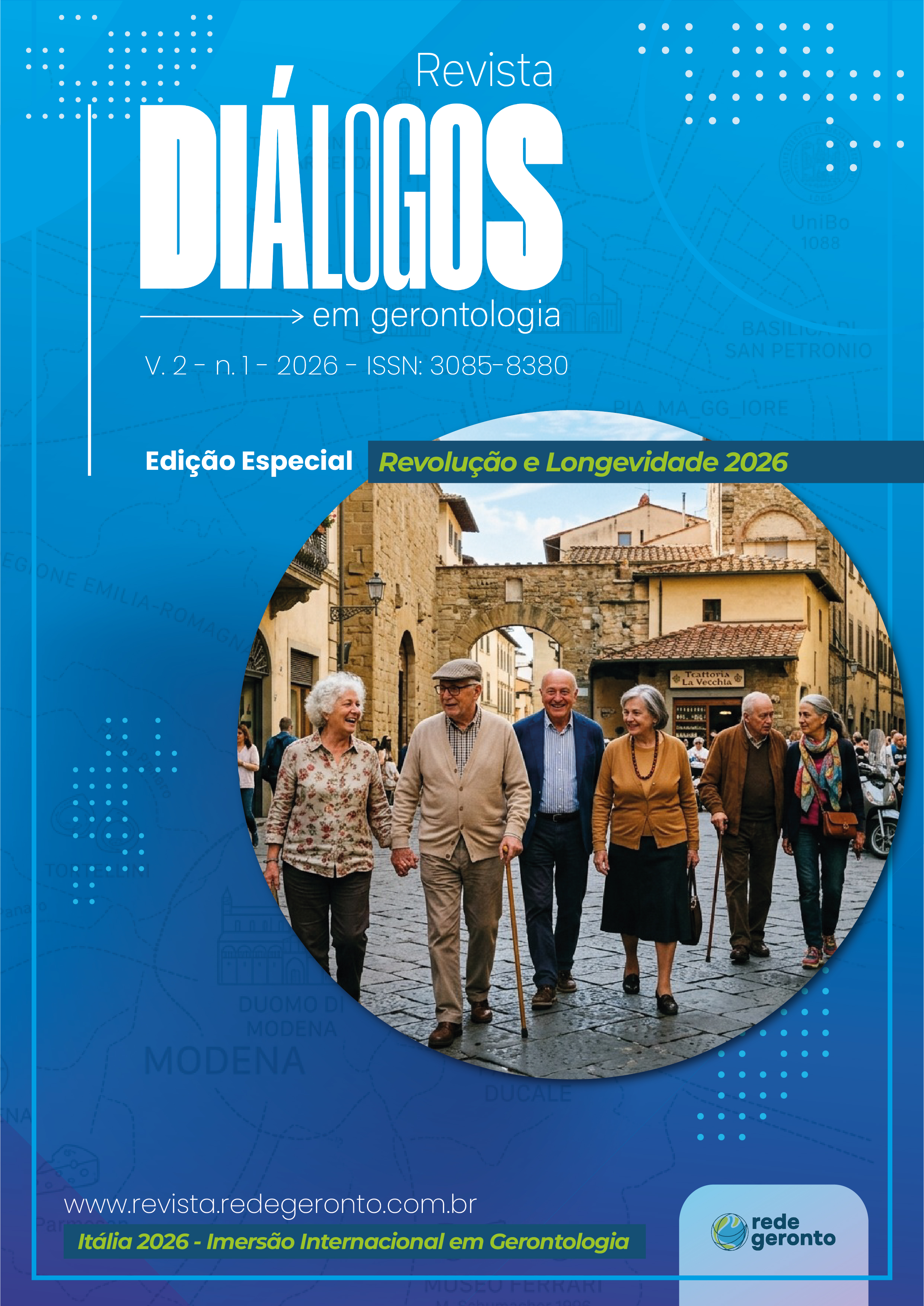
This article is based on an experience report derived from an observational internship carried out between January 15 and 30, 2026, within the scope of an international training program coordinated by the Rede Geronto in cooperation with the Azienda Sanitaria Locale AT, in the territory of Asti. ASL AT itself publicly reported that, until January 30, it had hosted a Brazilian delegation to learn about local healthy and active ageing projects, including cognitive prevention initiatives, hospital geriatric care, and palliative care (institutional news published on February 2, 2026).
The methodology adopted a qualitative descriptive approach, based on the analysis of daily records (Rapporto Stage) and observation in hospital and community-based settings. The results were organized into four axes: (i) a culture of mobility and “functional longevity”; (ii) territorial integration with a central role for coordination structures (COT/PUA) and the strengthening of community nursing, in line with the Italian reform of territorial care (DM 77/2022); (iii) prevention of cognitive decline through community initiatives and caregiver support; (iv) the robustness and maturity of palliative care supported by a legal framework (Law 38/2010) and recent organizational standards that expand the concept of palliative care beyond end-of-life situations.
It is concluded that training in geriatrics, when grounded in principles of functional longevity, gains strength by combining: multidimensional assessment and rehabilitation; territorial governance and safe care transitions; community-based cognitive prevention; and palliative care with ethical and communication competencies (including structured tools such as SPIKES).
Downloads
Published
Issue
Section
License
Copyright (c) 2026 Revista Diálogos em Gerontologia

This work is licensed under a Creative Commons Attribution-NonCommercial 4.0 International License.
A Revista oferece acesso livre e imediato ao seu conteúdo, em consonância com o princípio de que tornar o conhecimento científico amplamente disponível contribui para a democratização do saber. Os(as) autores(as), ao submeterem seus trabalhos, declaram-se detentores(as) dos direitos autorais e autorizam seu uso livre, desde que sem fins comerciais, com obrigatoriedade de atribuição de crédito apropriado à autoria original. Os conteúdos podem ser lidos, baixados, copiados, distribuídos e impressos, conforme os termos da licença Creative Commons Atribuição-NãoComercial 4.0 Internacional (CC BY-NC 4.0).